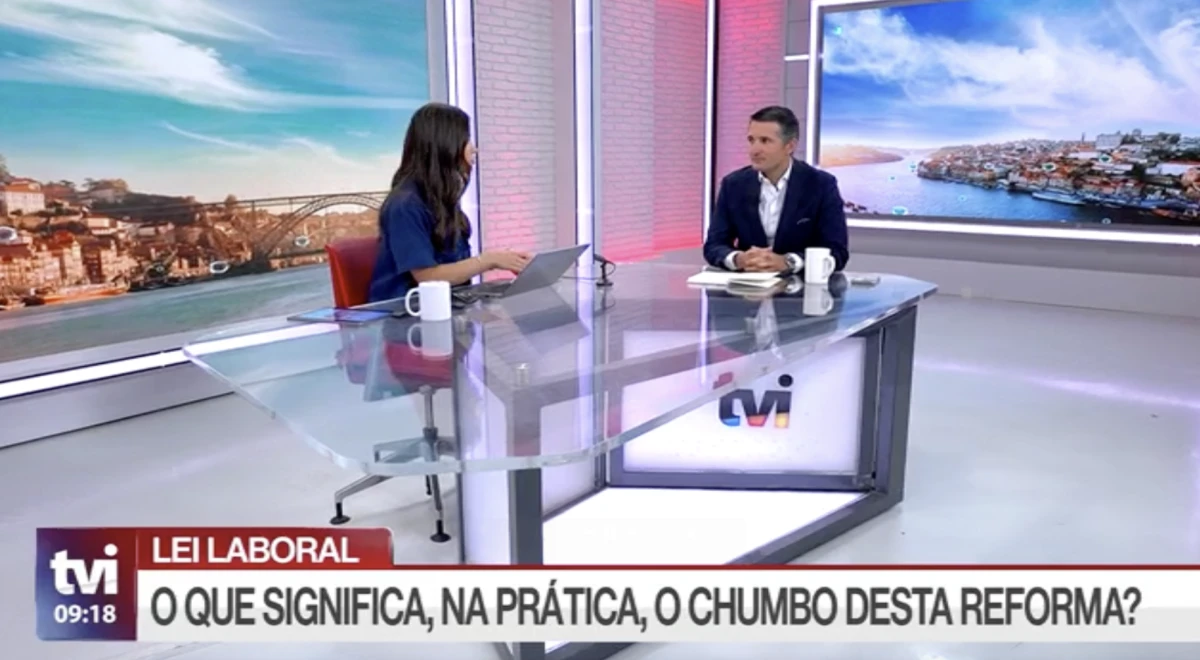

The Portuguese Government's bill to revise labour legislation was rejected at its first reading by the Portuguese Parliament in June 2026. As a result, the proposed labour law reform did not proceed to the committee stage for detailed consideration, bringing the legislative process to a halt.
In an interview with TVI, Eduardo Castro Marques, Managing Partner at Dower, commented on the rejection of the bill, arguing that a genuine labour law reform should go beyond amending existing rules and instead focus on modernising the labour market. According to him, the primary objective should be to prepare the world of work for future challenges through measures addressing labour taxation, professional training, and innovation.
In his view, there are three fundamental challenges that should be at the heart of any reform of Portuguese employment law. The first concerns labour taxation, which he considers one of the main obstacles to rewarding employees fairly while maintaining business competitiveness. By way of example, he noted that if a company wishes to grant an employee a salary increase of €150, the total cost to the employer is approximately €180, while the employee ultimately receives only around €70 net. According to Eduardo Castro Marques, this tax burden makes it difficult for companies to implement meaningful salary increases, limiting their ability to attract and retain talent.
The second challenge relates to professional training and the need to equip the workforce with the skills required for a rapidly evolving labour market. Referring to the World Economic Forum's Future of Jobs Report, he highlighted that around 70% of Portuguese workers are expected to require training or reskilling by 2030 as a result of the growing impact of artificial intelligence, digitalisation, and new ways of working. In his view, investing in skills development is essential to ensure that both businesses and the Portuguese economy remain competitive in the years ahead.
Finally, Eduardo Castro Marques argued that labour legislation should play a more active role in fostering innovation and supporting the transition to the future of work. Rather than merely regulating traditional employment models, he believes employment law should create the conditions for businesses and workers to adapt to technological change, encourage new forms of work organisation, and respond to the demands of an increasingly dynamic labour market. In his opinion, this is where a future labour law reform can deliver the greatest value for employees, employers, and the Portuguese economy as a whole.